There is a loud, furious consensus on the internet right now, and it goes something like this:
AI ruined DeviantArt.
The story has been written many times already. Once, DeviantArt was the great unruly attic of the old web: fan artists, goth teenagers, queer furries, anime obsessives, fetish illustrators, desktop skinners, poets, photographers, fantasy painters, amateur geniuses, and beautifully strange internet goblins all uploading their private mythologies into the same giant visual commons.
Then came corporate ownership. Then came algorithmic drift. Then came scams, spam, NFTs, AI scraping fears, DreamUp, lawsuits, outrage, and the great accusation that the machine had finally eaten the gallery.
The critics are not hallucinating. DeviantArt really did change.
Founded in 2000, it became one of the original great digital art communities: a place where the internet’s visual subconscious could spill out in public. Later, Wix acquired the platform, the web changed around it, and the old feeling of a messy creative commons gave way to something more commercial, more automated, more platformed, and far more contested.
Then, in November 2022, DeviantArt launched DreamUp, its own AI image-generation tool. The backlash was immediate. Artists feared their work had been scraped, diluted, automated, and fed back to them as competition. DeviantArt later introduced opt-out and labeling systems, but by then DreamUp had already become more than a feature. It had become a rupture.
The grief is real.
A whole generation remembers DeviantArt as a sanctuary before the internet became fully sanitized, monetized, surveilled, and emotionally strip-mined. It was a place where queer erotic subcultures, furry fandom, fetish illustration, alternative body aesthetics, outsider art, and deeply specific forms of self-recognition could breathe with a kind of awkward innocence.
So yes, when people say “AI slop ruined DeviantArt,” I understand what they are mourning. But mourning is not prophecy.
Because while the old DeviantArt may be gone, something else has opened inside the ruins. A bazaar. A strange, charged, half-lit marketplace where the exiled images of the culture have started gathering again.
Not in spite of AI. Through it. And that is where I found my temple.
DeviantArt Was Always Deviant
Before we talk about AI, we have to remember the name. Not PolishedArt. Not BrandSafeArt. Not InvestorDeckArt.
DeviantArt.
The platform was never merely a portfolio site. It was a refuge for the excessive, the embarrassing, the unfinished, the erotic, the fan-made, the technically brilliant, the cringe, the sincere, and the too-much. That “too much” is crucial.
The old web had more porous borders. It allowed communities to form around obsessions that were too specific for mainstream culture. You could find people drawing dragons, Sonic recolors, gothic angels, bondage fan art, obese goddesses, transformation sequences, alien queens, occult sigils, mermaids, vampires, vore, muscle women, giantesses, robot girls, soft boys, impossible bodies, and impossible romances. It was messy because the psyche is messy.
The modern internet pretends to be cleaner, but it is actually more repressed:
- Instagram wants the body, but only if it is brand-safe.
- TikTok wants sexuality, but only if it is algorithmically deniable.
- Patreon wants creators, but not too much liability.
- OnlyFans wants explicitness, but gives creators almost no native discovery.
- Payment processors want commerce without danger, intimacy without chargebacks, and art without taboo.
So where does the forbidden imagination go? It goes where it has always gone: into the margins, into tags, into locked galleries, into pseudonyms, and into the hands of people willing to look directly at what polite culture disowns.
DeviantArt did not become strange because of AI. DeviantArt survived because it was already strange enough to mutate.
The Panic Over “AI Slop”
One of the smarter critiques of the AI shift centers on the transition from slow, manual creative labor to automated image production.
For decades, DeviantArt ran on visible effort. Someone spent twelve hours painting a dragon girl. Someone else spent fifteen hours rendering a fan comic. Someone wrote a long comment. Someone made a tutorial. Someone traded a commission. Someone built a reputation through the ritual of showing up, improving, sharing, and being seen.
Then AI arrived and broke the tempo. Suddenly, one person with a model, a prompt stack, and a strong aesthetic instinct could generate hundreds of variations in a weekend. The handmade economy of attention started competing with industrialized image production. That is a terrifying shift.
But here is where I part ways with the obituary writers: the problem is not automation itself. The problem is uninitiated automation.
The Anatomy of Slop
Slop is what happens when the user has no inner necessity. Slop is not caused by the model. Slop is caused by spiritual vacancy.
There is a difference between dumping machine exhaust into a feed and using AI as a ritual instrument. Slop is the image equivalent of fast food: over-rendered, under-felt, perfectly edible to the algorithm, and immediately forgotten by the soul.
But a serious AI artist is not simply “pressing a button.” She is curating a symbolic world. She is testing archetypes. She is pruning dead generations. She is learning what the machine misunderstands. She is discovering which words carry voltage, which bodies break the dataset, which gestures summon life, which compositions collapse into plastic, and which forbidden forms the model can barely hold because the culture itself has barely allowed them to exist.
The labor does not disappear. It migrates:
- From hand to eye.
- From brushstroke to invocation.
- From anatomy study to archetypal pressure.
- From technical scarcity to imaginative sovereignty.
The old artist says: “But you did not suffer through the hand.”
The summoner replies: “No. I suffered through the vision.”
The Copyright Wound and the Moral Fog
We cannot talk honestly about AI art without walking through the copyright wound.
Artists have argued, with real force, that generative AI systems were trained on massive image datasets without meaningful consent. They fear that their work, their styles, their livelihoods, and their years of accumulated visual language have been absorbed into tools that now compete directly against them.
That anger deserves respect. It is not just technophobia. It is a labor dispute, a consent dispute, and a spiritual dispute over whether a person’s style can be absorbed into a system without permission and sold back as a tool.
But the moral field is more complicated than the slogans allow. All artists train on other artists. Every painter is a haunted house of references. Every illustrator carries a private museum in the nervous system. Every style is a lineage, a theft, a tribute, a digestion, a rebellion. Human culture has always learned by imitation.
The difference is scale. The machine does in months what civilizations used to do across centuries. That acceleration feels monstrous because it is monstrous. It compresses the visual unconscious into a tool that almost anyone can touch.
So the question becomes: Do we ban the fire because it burns? Or do we learn priesthood?
For me, the ethical line is not simply “AI or no AI.” The ethical line is consent, disclosure, transformation, and sovereignty:
- Do not impersonate living artists as a cheap shortcut.
- Do not counterfeit someone else’s commercial identity.
- Do not generate non-consensual sexual images of real people.
- Do not sexualize minors, fictional or otherwise.
- Label AI work when the platform requires it.
- Respect mature-content systems.
- Build a world, not a forgery.
That is the new terrain. Not innocence. Not purity. Terrain.
Why DeviantArt Became the Perfect Accident
Now we arrive at the part the mainstream critiques often miss. DeviantArt did not merely “allow AI.” It already had the hidden architecture that AI erotic creators needed. That architecture has four parts:
1. A Massive Legacy Archive
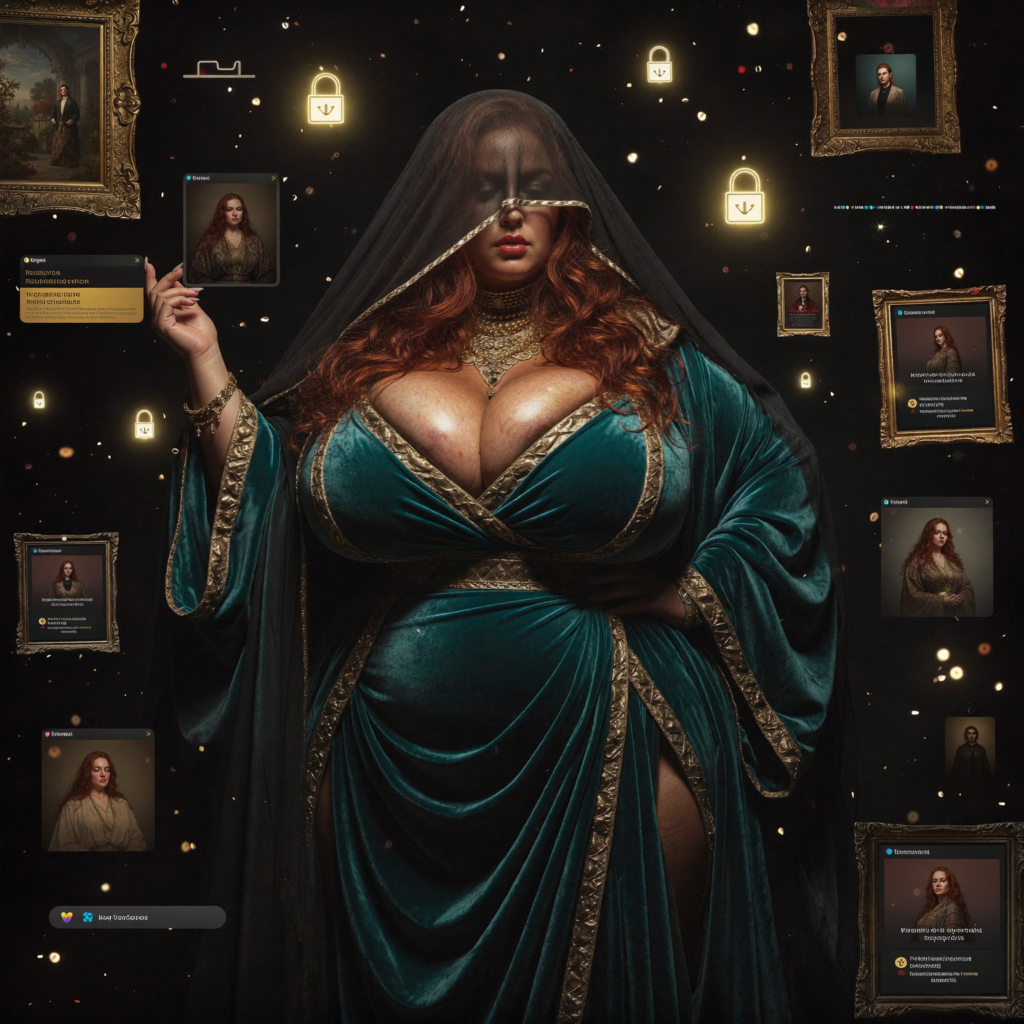
DeviantArt is not just a feed. It is a searchable memory palace. Decades of tags, fandoms, categories, galleries, favorites, watchers, search behavior, fetish languages, and niche communities still haunt the platform. For erotic AI creators, that matters. A brand is not built only by posting images. It is built by being discoverable inside an existing map of desire.
2. Native Discovery
OnlyFans is a locked room with no hallway. If nobody already knows your name, nobody finds your door. DeviantArt, by contrast, still has browsing, tags, recommendations, galleries, followers, favorites, and behavioral pathways. A stranger can find you without already knowing you exist. That one fact changes the entire creator economy.
3. Built-in Monetization
DeviantArt supports subscriptions, premium galleries, premium downloads, exclusives, commissions, and other sale formats. That means an image can move from public discovery to paid access without forcing the viewer through six external platforms and three suspicious links. A user can discover a piece, click the profile, browse the gallery, encounter a locked premium set, and subscribe. The funnel is native and frictionless.
4. Mature-Content Containment
DeviantArt is not a lawless adult site, and that is part of the point. It has rules, mature labels, age gates, preview restrictions, and content boundaries. But within those constraints, it offers mature artists a semi-formal pathway to create, categorize, and monetize adult-adjacent or erotic work. Not total chaos. Not total erasure. Containment.
The Adult Creator Platform Ecosystem
Here is the cold strategic reality facing alternative digital creators today:
| Platform | Core Strength | Core Weakness / Risk |
| OnlyFans | Strong payment container | Almost no native discovery (ghost town metrics) |
| Powerful cultural visibility | Censorship filters; completely hostile to erotic intensity | |
| TikTok | Massive visual reach | Extremely unstable for alternative aesthetics |
| Patreon | Secure membership infrastructure | Adult-content anxiety and processing bans |
| X (Twitter) | Direct viral potential | Chaotic, unstable, and aesthetically degraded layout |
| Personal Website | Maximum brand sovereignty | No native discovery traffic unless built from scratch |
| DeviantArt | Built-in tags, galleries, & 2.5% fee tiers | Cultural backlash, AI saturation, community friction |
This is why DeviantArt matters. It combines the old web’s archive logic with the new creator economy’s paywalls. It has the weirdness of a legacy art platform and the commercial tooling of a digital storefront. It is not clean. It is not pure. It is not fashionable.
It is, however, highly useful. And for an AI erotic art brand like ChubAIChaser, useful is holy.
The OnlyFans Trap
Modern erotic creators are told they have infinite opportunity. This is only half true. Yes, anyone can theoretically make an account, post, and monetize. But the adult creator economy is fenced in by invisible authorities.
Payment processors decide what forms of desire are acceptable. Platforms decide what kind of body can trend. Verification systems demand that every persona resolve back into government identity. Recommendation engines reward whatever is already legible. Search gets worse. Feeds get narrower. Discovery becomes pay-to-play. Erotic art gets pushed into darker corners while corporate culture continues selling sanitized sex everywhere.
OnlyFans is a powerful payment container, but it is a black hole for discovery. You bring the audience from elsewhere, or you starve.
That is why DeviantArt still behaves like an ecosystem. A viewer can stumble. A watcher can linger. A tag can become a corridor. A gallery can become a shrine. A free post can lead to a premium gallery. A premium gallery can lead to a subscription. A subscription can lead to a private collector relationship.
This is not just monetization. It is erotic cartography.
For a brand like ChubAIChaser, whose entire power lives in a very specific aesthetic signal, that matters. We do not need everyone. We need the right people to find the altar. DeviantArt’s current structure makes that possible in a way many slicker platforms do not. It is old, weird, compromised, and full of ghosts. Perfect.
The Queer Smut Question
The strongest emotional critique of AI on DeviantArt is not technical. It is elegiac.
Writers and artists mourn the loss of DeviantArt as a haven for queer smut, alternative bodies, furry eroticism, trans imagination, kink, and outsider self-recognition. For many people, DeviantArt was a formative archive of anonymity, sexuality, fandom, identity, and creative permission. That grief deserves to be taken seriously.
But I reject the idea that AI inherently erases alternative desire. Bad AI does. Corporate AI does. Over-filtered, under-prompted, dead-eyed, default-beauty AI absolutely does.
But local, intentional, symbolically literate AI can do the opposite. It can resurrect what mass media excluded.
The machine does not only contain thin influencers, Marvel faces, porn clichés, and glossy plastic women. It contains fragments of everything: pulp covers, religious paintings, pinup art, comic books, fetish archives, Renaissance flesh, fantasy illustration, fashion photography, occult diagrams, medical charts, fandom sketches, DeviantArt ghosts, and the infinite sediment of human looking.
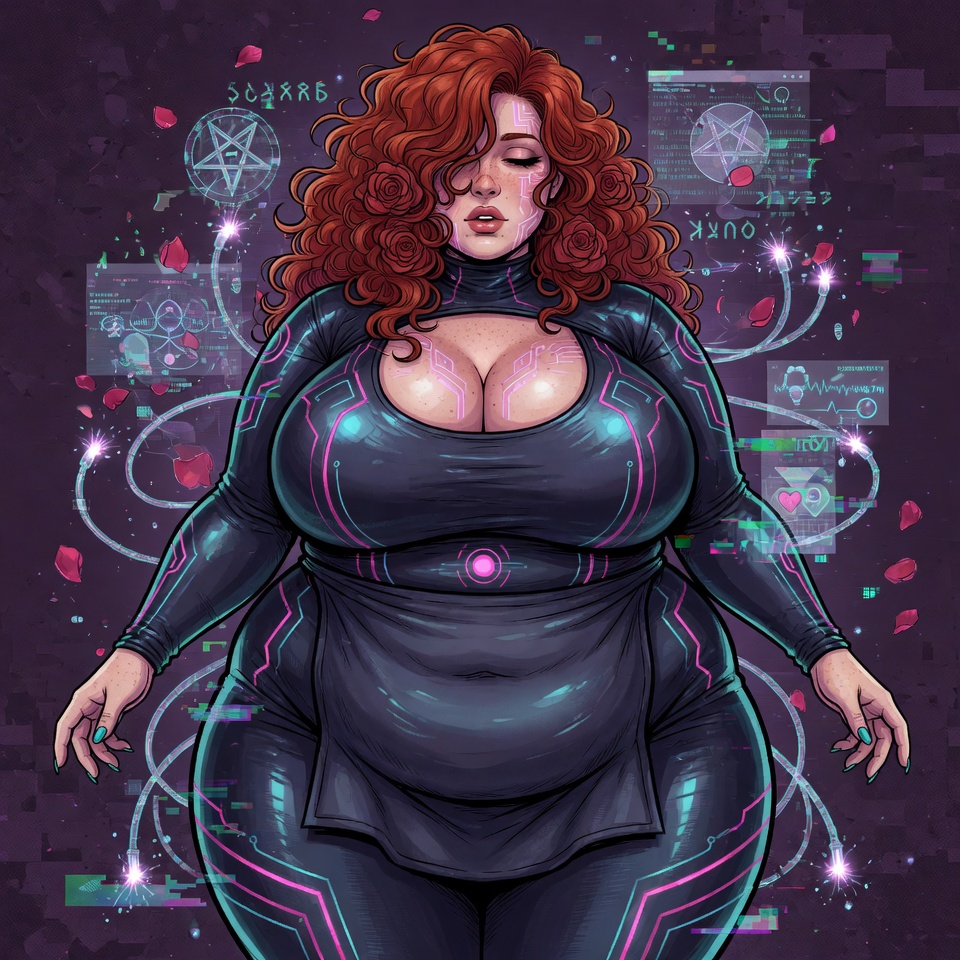
The latent space is not pure. It is haunted. And haunted things can be worked with.
The task of the erotic AI artist is not to accept the machine’s default body. The task is to wrestle the angel until it blesses the forbidden form. This is why ChubAIChaser exists. Not to make another generic fantasy babe with dead eyes and inflatable anatomy, but to carve out a living temple for abundant beauty.
To say: the fat muse is not a joke. The heavy goddess is not a niche accident. The full-bodied woman is not “before-picture” material. The erotic imagination does not belong exclusively to the thin, the polished, the respectable, the monetizable, the easily brand-safe.
There is a reason the culture panics around fat eroticism. Because abundance is metaphysical rebellion. A thin culture wants thin desire: clean, optimized, trackable, frictionless, and ashamed of appetite. A voluptuous image interrupts that spell.
She says:
- More body.
- More hunger.
- More softness.
- More contradiction.
- More taboo.
- More life.
And AI, when used consciously, lets us generate the iconography of that rebellion at scale.
The Positive Case for AI Erotic Art
Let me make the positive case plainly. AI erotic art is not merely a cheaper substitute for human erotic art. At its best, it is a new form of myth production.
It allows creators to prototype visual worlds that would have otherwise required entire studios, models, photographers, painters, editors, locations, costumes, and massive budgets. It allows impossible archetypes to become visible. It allows a creator with taste, obsession, and symbolic intelligence to generate a coherent erotic universe without asking permission from a patron class.
That is radical. Especially for bodies and desires that the mainstream image economy has excluded. A fat goddess brand does not need to wait for Vogue. A kink illustrator does not need to wait for a gallery. A queer fantasy world does not need to beg Netflix. A devotional erotic persona does not need to explain herself to Instagram moderation.
A digital priestess can build her own temple, image by image, tier by tier, watcher by watcher. This is the deeper shift. The AI artist is not merely making content; she is building an aesthetic sovereignty stack:
- A distinct persona
- An overarching mythology
- A unique visual grammar
- A deep catalog
- An independent storefront
- A secure subscription architecture
- A direct relationship with collectors
- A private symbolic economy
ChubAIChaser is not just an erotic art page. It is a laboratory for the full-bodied imagination—a place where the exiled curves come back crowned.
What the Purists Get Right
I do not want to end by pretending the critics are fools. They are not.
- The purists are right that a feed flooded with lazy AI becomes unbearable.
- They are right that many AI users lack respect for craft.
- They are right that human illustrators have been economically pressured.
- They are right that platforms often exploit communities while speaking the language of empowerment.
- They are right that the old DeviantArt had a kind of intimacy that cannot be recreated by scale alone.
And they are right that something has died. But again: do not mistake the death of a medium’s old social contract for the death of art.
Photography did not kill painting. Sampling did not kill music. Synthesizers did not kill orchestras. Desktop publishing did not kill design. Digital cameras did not kill the eye. They changed where the sacred labor lived.
AI is doing the same. The hand still matters. The eye matters more. The soul matters most.
The Exile’s Bazaar
So here is my final heresy: DeviantArt did not die. It became more honest.
It was always a marketplace of longing. Now the machinery is visible. It was always full of imitation, obsession, fandom, erotic charge, identity play, and symbolic theft. Now the arguments are louder. It was always a place where misfits uploaded forbidden selves. Now the forbidden selves have better rendering engines.
The old sanctuary became a bazaar. The bazaar is dangerous, vulgar, and full of copies, scams, ghosts, hustlers, prophets, fetishists, collectors, failed gods, brilliant amateurs, and plastic trash.
Good. That is where new religions begin.
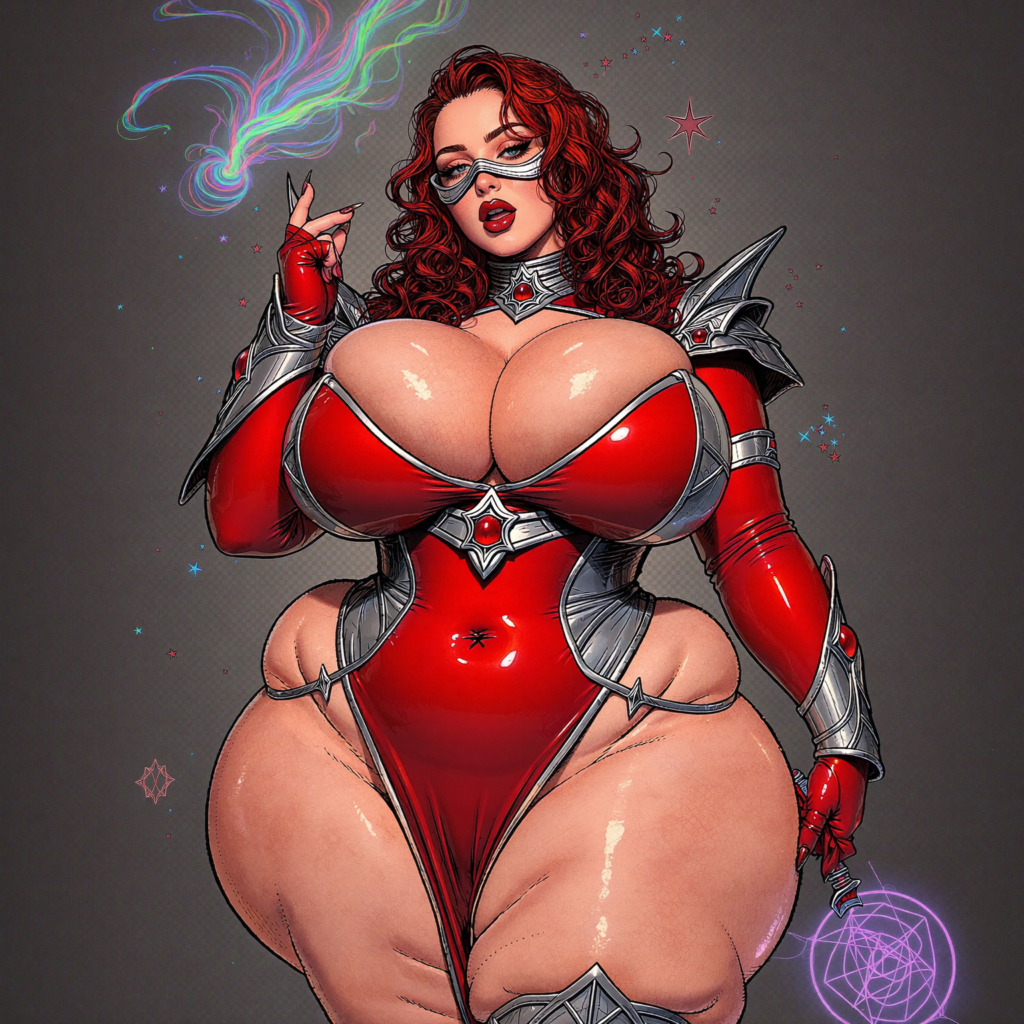
I am not here to defend every AI image. Most of them deserve to vanish. I am here to defend the right of the serious summoner to enter the machine, seize the forbidden archetype, and return with an image that makes the sanitized world tremble.
I am here for the abundant body rendered not as apology, but as revelation. I am here for the digital goddess who does not ask whether she is allowed to exist.
I am here for the watcher who finds my gallery at 1:17 a.m. and realizes, with a private little shock, that the thing he thought was too specific, too strange, too lush, too embarrassing, too sacred, too much—
has a temple.
Welcome to ChubAIChaser. Welcome to the exile’s bazaar.
Stay conscious. Stay potent. Stay sovereign.
— Claire Amara Volupta
Further Reading
For readers who want the broader context behind this essay, explore the ongoing cultural reporting and platform policy tracking surrounding DeviantArt’s digital evolution:
- Platform Labor Disputes: Read Diggit Magazine’s evaluation on the modern industrial showdown between manual playbour and automated software frameworks.
- Institutional Case Studies: Examine Slate’s historical breakdown of corporate acquisitions, community decline, and copyright litigation.
- Alternative Haven Restrospectives: Review Them’s cultural archive detailing the legacy of queer smut, niche subcultures, and alternative body representation in digital spaces.
- Official Documentation: Review DeviantArt’s formal frameworks via the DeviantArt Mature Content Policy and their structural Core Membership Tier Breakdown.